
Gallstones (Cholelithiasis): Causes, Symptoms, Types, Diagnosis, Complications, Treatment and Prevention
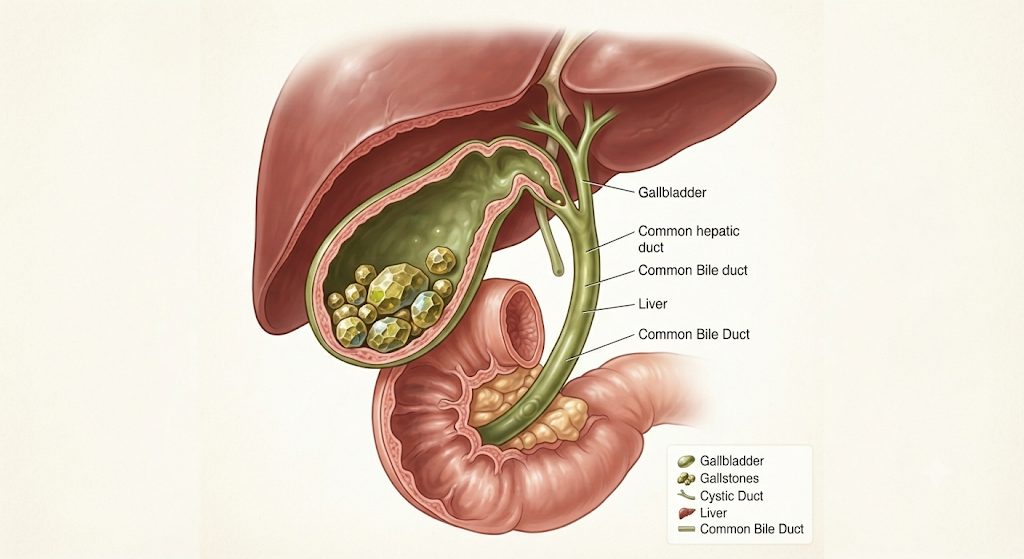
Gallstones, medically known as Cholelithiasis, are hardened deposits of digestive fluid that develop inside the gallbladder. They may vary in size, ranging from tiny grains resembling sand to stones as large as a golf ball.
Some people develop a single large gallstone, while others may have multiple small stones in their gallbladder.
Gallstones are a common digestive system disorder. Many individuals may have gallstones without experiencing any symptoms. However, when a stone blocks the normal flow of bile through the bile ducts, it can cause severe abdominal pain and other complications.
Understanding the causes, symptoms, risk factors and available treatment options is important for early diagnosis and appropriate medical management.
1. What Is the Gallbladder and What Does It Do?
The gallbladder is a small, pear-shaped organ situated beneath the liver, on the upper right side of the abdomen.
Its primary function is to store and concentrate bile produced by the liver.
What is bile?
Bile is a digestive fluid that helps the body break down and absorb fats from the food we eat.
When we consume food, particularly fatty food, the gallbladder contracts and releases bile through small tubes called bile ducts into the small intestine.
Bile contains:
Cholesterol
Bile salts
Bilirubin
Water
Electrolytes
When the chemical composition of bile becomes imbalanced, certain substances can crystallise and gradually form gallstones.
2. What Are the Different Types of Gallstones?
Gallstones are broadly classified into two major types.
A. Cholesterol Gallstones
Cholesterol stones are the most common type of gallstones.
They develop when bile contains more cholesterol than it can dissolve. Excess cholesterol may crystallise and gradually form stones.
Characteristics:
Usually yellowish-green in colour.
Mainly composed of hardened cholesterol.
May occur as single or multiple stones.
Associated with obesity, metabolic factors and certain dietary patterns.
B. Pigment Gallstones
Pigment stones develop due to increased bilirubin in bile.
Bilirubin is a yellow pigment produced during the breakdown of red blood cells.
These stones are generally classified into:
Black pigment stones:
Usually associated with certain blood disorders.
May occur in people with chronic liver disease or conditions involving increased breakdown of red blood cells.
Brown pigment stones:
May develop in the bile ducts.
Often associated with bacterial infection or bile duct inflammation.
The type of gallstone can influence its underlying cause and clinical management.
3. What Are the Causes of Gallstones?
Gallstones develop due to changes in the chemical composition of bile or inadequate emptying of the gallbladder.
Some important contributing factors include:
1 .Excess cholesterol in bile.
2 Increased bilirubin levels.
3 Reduced concentration of bile salts.
4. Incomplete emptying of the gallbladder
5.Obesity and metabolic disorders.
6. Rapid weight loss.
7. Hormonal changes.
8 Certain liver and blood disorders.
In many individuals, gallstones develop due to a combination of these factors rather than one single cause.
4. What Are the Risk Factors for Gallstones?
Certain individuals are more likely to develop gallstones.
Important risk factors include:
1. Female gender
Women have a higher risk of developing cholesterol gallstones, partly due to the influence of estrogen on cholesterol metabolism.
2. Age above 40 years
The risk of gallstone formation generally increases with age.
3. Obesity
Excess body weight can increase cholesterol secretion into bile, contributing to gallstone formation.
4. Rapid weight loss
Losing weight very quickly, including through crash diets or certain weight-loss procedures, can increase the risk of gallstones.
5. Pregnancy
Hormonal changes during pregnancy can affect gallbladder emptying and bile composition.
6. Family history
Genetic factors may increase susceptibility to gallstone formation.
7. Diabetes and insulin resistance
Metabolic abnormalities can increase the risk of gallstones.
8. Dietary factors
A diet high in refined carbohydrates and unhealthy fats and low in fibre may contribute to increased risk.
9. Liver disorders and certain blood conditions
Some liver diseases and disorders involving increased red blood cell destruction can increase the likelihood of pigment stones.
5. What Are the Signs and Symptoms of Gallstones?
Many individuals with gallstones do not experience any symptoms. These are called asymptomatic or silent gallstones.
Symptoms usually develop when a gallstone obstructs the cystic duct or another part of the biliary system.
The common symptoms include:
1. Pain in the Upper Right Abdomen
This is one of the characteristic symptoms of gallstones.
Pain is generally experienced below the right rib cage and may spread towards the back or right shoulder.
2. Abdominal Pain After Eating
Some people experience pain after consuming fatty or heavy meals because the gallbladder contracts to release bile.
3. Nausea and Vomiting
Gallbladder attacks may be accompanied by nausea, vomiting and abdominal discomfort.
4. Bloating and Indigestion
Some individuals report abdominal fullness, bloating and indigestion. However, these symptoms are nonspecific and can occur in many digestive disorders.
5. Pain Between the Shoulder Blades
Gallbladder pain may sometimes radiate towards the back or the right shoulder blade.
6. Persistent Abdominal Pain
If a gallstone causes prolonged obstruction and inflammation, pain may become continuous and severe.
7. Jaundice
If a stone blocks the common bile duct, bilirubin may accumulate in the blood, causing yellowish discolouration of the skin and eyes.
Other symptoms may include:
Dark-coloured urine.
Pale or clay-coloured stools.
Itching of the skin.
Important: Fever, chills, persistent severe abdominal pain, repeated vomiting or jaundice require urgent medical assessment.
6. What Is a Gallbladder Attack (Biliary Colic)?
A gallbladder attack, also known as biliary colic, occurs when a gallstone temporarily blocks the cystic duct, preventing normal bile drainage.
The gallbladder contracts against this obstruction, resulting in pain.
Typical features include:
Sudden pain in the upper right abdomen.
Pain in the upper central abdomen.
Pain radiating towards the back or right shoulder.
Nausea and vomiting.
Pain lasting from approximately 30 minutes to several hours.
Although the pain may settle when the obstruction is relieved, recurrent attacks are possible.
Repeated episodes should not be ignored.
7. What Are the Complications of Gallstones?
Gallstones can sometimes lead to serious complications, particularly when they obstruct the bile ducts.
A. Acute Cholecystitis
Acute cholecystitis refers to inflammation of the gallbladder, commonly caused by obstruction of the cystic duct by a gallstone.
Symptoms include:
Severe and persistent right upper abdominal pain.
Fever.
Nausea and vomiting.
Tenderness over the gallbladder region.
This condition generally requires hospital assessment and treatment.
B. Choledocholithiasis
This condition occurs when gallstones are present in the common bile duct.
It can obstruct bile flow and lead to jaundice, infection and other complications.
C. Acute Cholangitis
Acute cholangitis is an infection of the bile ducts, usually associated with biliary obstruction.
Symptoms may include fever, chills, abdominal pain and jaundice.
It is a medical emergency requiring prompt treatment.
D. Acute Pancreatitis
A gallstone may obstruct the opening of the pancreatic duct, causing inflammation of the pancreas.
Symptoms include:
Severe upper abdominal pain.
Pain radiating towards the back.
Nausea and vomiting.
Abdominal tenderness.
Gallstone-related pancreatitis can be serious and requires hospital treatment.
E. Gallbladder Perforation
In severe untreated gallbladder inflammation, tissue damage may result in perforation, potentially causing infection inside the abdominal cavity.
Early diagnosis and appropriate management help reduce the risk of serious complications.
8. How Are Gallstones Diagnosed?
Diagnosis involves clinical assessment, laboratory investigations and imaging studies.
1. Abdominal Ultrasound
Ultrasound is generally the first-line imaging investigation for detecting gallstones.
It can help identify:
Number of gallstones.
Approximate size of stones.
Gallbladder wall thickening.
Gallbladder inflammation.
Dilatation of the bile ducts.
2. Liver Function Tests (LFT)
Blood tests may help identify abnormalities associated with bile duct obstruction or liver and biliary inflammation.
These may include:
Bilirubin.
SGOT (AST).
SGPT (ALT).
Alkaline phosphatase.
GGT.
3. Complete Blood Count (CBC)
A CBC may help identify signs of infection or inflammation.
4. MRI and MRCP
Magnetic Resonance Cholangiopancreatography (MRCP) is a specialised MRI technique that provides detailed images of the bile ducts and pancreatic ducts.
It may be recommended when common bile duct stones are suspected.
5. CT Scan
A CT scan may be useful when complications or alternative causes of abdominal pain are being investigated. However, ultrasound is generally better for detecting uncomplicated gallbladder stones.
6. ERCP
Endoscopic Retrograde Cholangiopancreatography (ERCP) is a specialised procedure that can identify and remove stones obstructing the common bile duct.
9. What Are the Available Treatment Options for Gallstones?
Treatment depends on the patient’s symptoms, the location and type of stones, associated complications and overall health.
A. Observation and Monitoring
Not every individual with gallstones requires immediate treatment.
People with incidentally detected gallstones who have no symptoms and a normal gallbladder and biliary system generally do not require treatment.
Regular medical assessment may be appropriate depending on individual circumstances.
B. Laparoscopic Cholecystectomy
Surgical removal of the gallbladder is called cholecystectomy.
Laparoscopic cholecystectomy is the standard treatment for symptomatic gallbladder stones.
The procedure involves:
Making small incisions in the abdomen.
Inserting a camera and specialised surgical instruments.
Removing the gallbladder.
Allowing bile to flow directly from the liver into the small intestine.
Most people can live a normal life without a gallbladder.
C. ERCP
When stones are present in the common bile duct, ERCP may be used to remove them.
This procedure does not remove the gallbladder itself.
D. Medicines to Dissolve Gallstones
In selected patients, medicines such as ursodeoxycholic acid may be considered for dissolving certain small cholesterol stones.
However:
They are suitable only for selected cases.
Treatment may take months or years.
They are not effective for all types of stones.
Gallstones may recur after treatment.
E. Other Procedures
Shock-wave lithotripsy has been used in selected cases but is rarely employed for routine gallstone treatment.
10. Can Gallstones Be Treated Without Surgery?
This is one of the most frequently asked questions by patients.
The answer depends on whether the gallstones are causing symptoms and whether complications are present.
People with asymptomatic gallstones often do not require surgery.
For symptomatic gallstones, laparoscopic gallbladder removal is the standard recommended treatment.
Certain medicines may dissolve selected cholesterol stones in carefully chosen patients, but they are not suitable for everyone.
It is important to understand that dietary changes, herbal remedies, home remedies and alternative therapies have not been established as reliable methods of dissolving or removing gallstones.
Patients should not delay recommended medical or surgical treatment in the hope that an alternative treatment will clear an obstructing stone.
11. What Foods Should Be Avoided if You Have Gallstones?
Diet does not directly dissolve existing gallstones. However, appropriate dietary habits may help reduce digestive discomfort and support general metabolic health.
Some patients find that fatty meals trigger gallbladder pain.
Foods to Limit
Deep-fried foods.
Excessively oily preparations.
High-fat processed foods.
Fatty meats.
Excessive butter and cream.
Fast foods.
Bakery products containing high amounts of saturated fats.
Sugary beverages and highly refined foods.
Foods to Include
Fresh vegetables.
Fruits.
Whole grains.
Oats.
Pulses and legumes.
Fibre-rich foods.
Lean protein sources.
Adequate water.
A balanced diet with moderate amounts of healthy fats is generally preferable to an extremely restrictive or fat-free diet.
Patients should avoid crash dieting and rapid weight loss.
12. Can Lifestyle Changes Help Prevent Gallstones?
Although gallstones cannot always be prevented, certain lifestyle measures may help reduce the risk.
1. Maintain a healthy body weight
Avoid excessive weight gain and obesity.
2. Lose weight gradually
Rapid weight loss can increase the risk of gallstone formation.
3. Eat a balanced diet
Include vegetables, fruits, whole grains and adequate fibre.
4. Exercise regularly
Regular physical activity supports healthy weight management and metabolic health.
5. Avoid crash diets
Sudden and extreme dietary restrictions may interfere with normal gallbladder emptying.
6. Manage diabetes and metabolic disorders
Proper management of blood sugar and other metabolic risk factors is important.
13. Can Gallstones Be Prevented Completely?
Genetic factors, age, hormonal influences, medical conditions and metabolic factors can contribute to their formation.
However, maintaining a healthy lifestyle, eating a balanced diet, avoiding rapid weight loss and managing underlying medical conditions may help reduce the risk.
14. Frequently Asked Questions About Gallstones
Q1. What is the normal size of a gallstone?
There is no single normal size. Gallstones can range from tiny crystals to several centimetres. Their clinical significance depends on their location, symptoms and associated complications, not size alone.
Q2. Can small gallstones be more dangerous than large gallstones?
Small stones may sometimes pass into the bile duct and cause obstruction or pancreatitis. However, large stones can also cause gallbladder complications. Size alone cannot determine the severity of the condition.
Q3. Can gallstones disappear on their own?
Most gallstones do not disappear spontaneously. Selected cholesterol stones may respond to prescribed dissolution medicines, but this is not a suitable treatment for everyone.
Q4. Can gallstones cause back pain?
Yes. Gallbladder pain can radiate towards the back and right shoulder blade.
Q5. Can gallstones cause acidity and gas?
Some patients report bloating, indigestion and nausea. However, these symptoms are not specific to gallstones and may have other digestive causes.
Q6. Can a person live without a gallbladder?
Yes. The gallbladder is not essential for survival. After surgical removal, bile flows directly from the liver into the small intestine.
Q7. Is surgery necessary for every gallstone patient?
No. People with asymptomatic gallstones generally do not need surgery. However, symptomatic gallstones and complications require appropriate medical and surgical assessment.
Q8. Can gallstones cause jaundice?
Yes. If a gallstone blocks the common bile duct, bilirubin can accumulate in the blood, resulting in jaundice.
Q9. Can gallstones cause pancreatitis?
Yes. A gallstone can obstruct the pancreatic duct opening and trigger acute pancreatitis, which requires urgent hospital treatment.
Q10. Can homeopathy dissolve gallstones?
Yes ,There is currently reliable clinical evidence establishing homeopathy as a treatment that dissolves or removes gallstones. Patients should consult a qualified medical professional and should not postpone evidence-based treatment.
15. When Should You Consult a Doctor?
Do not ignore persistent or recurrent abdominal pain.
Seek medical assessment if you experience:
Repeated pain in the upper right abdomen.
Pain after meals.
Recurrent nausea and vomiting.
Unexplained abdominal discomfort.
Previously diagnosed gallstones with new symptoms.
Seek emergency medical attention immediately if you experience:
Severe or persistent abdominal pain.
Fever or chills.
Yellowing of the eyes or skin.
Dark urine and pale stools.
Severe abdominal pain radiating to the back with vomiting.
These symptoms may indicate gallbladder inflammation, bile duct obstruction, infection or pancreatitis.
1. Homeopathic medicines traditionally used for gallstone-related complaints
Medicine
Traditional homeopathic indications
Chelidonium Majus
Right upper abdominal discomfort, pain radiating towards the right shoulder blade, digestive complaints.
Carduus Marianus
Traditionally associated with liver and gallbladder complaints.
Berberis Vulgaris
Right-sided abdominal discomfort and radiating pains.
China Officinalis
Bloating, flatulence and digestive discomfort.
Nux Vomica
Indigestion, nausea and digestive complaints associated with dietary excess.
Lycopodium Clavatum
Abdominal bloating, flatulence and digestive disturbances.
Calcarea Carbonica
Traditionally considered in patients with certain constitutional symptom patterns.
Cholesterinum
Traditionally used in homeopathic practice for complaints associated with gallstones.
Conclusion
Gallstones are a common condition of the digestive system that may remain silent for years or cause painful and potentially serious complications.
Understanding the causes, recognising the early symptoms, obtaining an accurate diagnosis and choosing appropriate treatment are essential for protecting digestive health.
Every patient with gallstones requires individual assessment. Treatment decisions should be based on symptoms, imaging findings, the location of the stones and the presence or absence of complications.
At Health Global Homoeopathy Clinic, we believe in patient education, responsible healthcare guidance and helping individuals make informed decisions about their health.
For persistent abdominal symptoms or a previous diagnosis of gallstones, consult an appropriate qualified medical professional for evaluation and treatment guidance.
About Health Global Homoeopathy Clinic
Established in 2001, Health Global Homoeopathy Clinic provides homoeopathic consultation and patient care at two locations in Bangalore.
Vijayanagar Clinic
Health Global Homoeopathy
3rd Floor, No. 842, 5th Cross Road, MC Layout, Vijayanagar, Bengaluru – 560040.
Phone: +91 9035971275
Whitefield / Hoodi Clinic
Health Global Homoeopathy
303, 3rd Floor, No. 1, Sapthagiri Arcade, KEB Colony, ITPL Main Road, Hoodi, Mahadevpura, Bengaluru.560048
Phone: +91 7975520159
Website: https://www.healthglobalclinics.com
Disclaimer: This article is intended for general educational purposes and is not a substitute for professional medical diagnosis, treatment or emergency care.